
As someone who’s fascinated by the intricacies of fountain design, I’ve always been curious about the role that nozzles play in creating those mesmerizing water displays. After all, the nozzle is the heart and soul of any fountain – it’s what transforms a simple flow of water into something truly captivating.
Recently, I dove deep into the physics and engineering behind fountain nozzles, and let me tell you, the insights I’ve uncovered are nothing short of mind-blowing. It’s amazing how a seemingly simple component can have such a profound impact on the overall performance and aesthetic of a fountain.
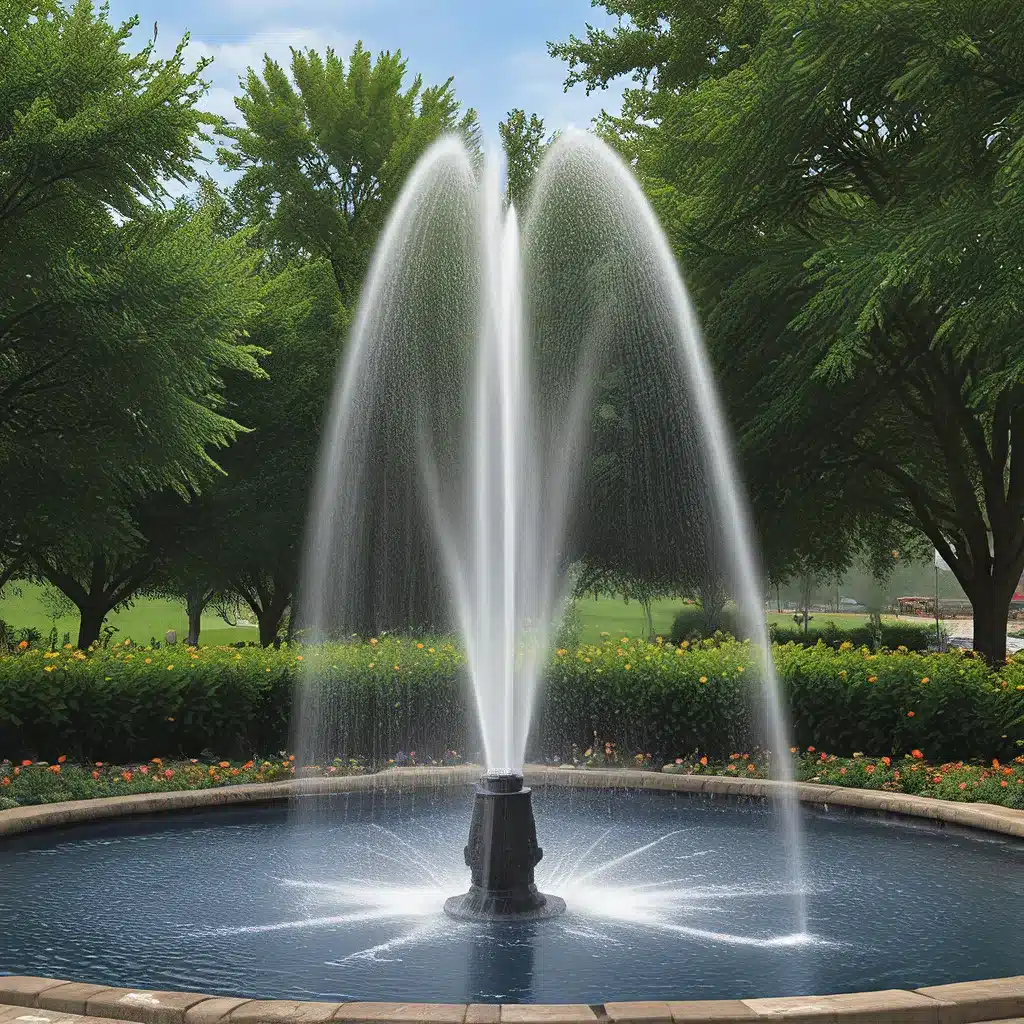
One of the key things I learned is that the shape, size, and orientation of the nozzle are critical factors in determining the height, width, and pattern of the water plume. Just a slight adjustment in the nozzle design can make all the difference between a ho-hum water display and a truly captivating one.
As I delved into the research, I discovered that there’s a whole science behind optimizing nozzle performance. Factors like fluid dynamics, surface tension, and air entrainment all play a crucial role in how the water is projected from the nozzle.
For example, did you know that the shape of the nozzle opening can significantly impact the water’s trajectory? A round, circular opening tends to produce a tall, narrow plume, while a slotted or rectangular opening can create a wider, more fan-like display. And the orientation of the nozzle – whether it’s pointing straight up or at an angle – can further influence the shape and height of the water stream.
But it’s not just the physical design of the nozzle that matters. The water pressure and flow rate feeding into the nozzle also have a huge impact on the final result. By carefully tuning these parameters, fountain designers can achieve everything from gentle, swirling water displays to powerful, high-arcing fountains.
One of the key takeaways from my research is that maximizing nozzle efficiency is crucial for creating the most impressive and energy-efficient fountain displays. This means finding the perfect balance between factors like nozzle design, water pressure, and flow rate.
Fountain lighting experts have developed all sorts of innovative techniques to optimize nozzle performance, from cutting-edge computational fluid dynamics (CFD) simulations to real-world testing and prototyping.
For example, some nozzle designs feature strategically placed air intakes that draw in surrounding air and mix it with the water, creating a more dynamic and visually appealing plume. Others use variable-speed pumps that can adjust the water flow to match changing environmental conditions, like wind or water level fluctuations.
And let’s not forget the importance of regular maintenance and cleaning to keep those nozzles in top shape. Even the slightest buildup of mineral deposits or debris can impair a nozzle’s performance, so it’s crucial to stay on top of that.
As I explored the cutting edge of fountain nozzle innovation, I couldn’t help but get excited about the future possibilities. It’s clear that this is a field that’s ripe for continued advancements, with researchers and designers constantly pushing the boundaries of what’s possible.
One particularly intriguing area of development is the use of adaptive, programmable nozzles that can dynamically adjust their shape, orientation, and other parameters in real-time. Imagine a fountain that can seamlessly transition between different water display patterns, responding to changes in wind, lighting, or user preferences.
Some experts believe that we may even see the integration of advanced sensors and artificial intelligence into fountain systems, allowing for truly intelligent and responsive water displays.
Of course, as with any emerging technology, there are also ongoing debates and areas of active research when it comes to fountain nozzle design. What’s the optimal balance between energy efficiency and visual impact? How can we minimize the environmental impact of fountain systems? These are the kinds of questions that fountain innovators are grappling with.
As you can probably tell, I’m completely fascinated by the world of fountain nozzle technology. And I believe that understanding these principles can be truly transformative for anyone looking to enhance the performance and visual appeal of their fountain.
Whether you’re a homeowner with a modest backyard fountain or a commercial property manager overseeing a grand, public water feature, the insights I’ve shared today can help you take your fountain to the next level.
By experimenting with different nozzle designs, optimizing water pressure and flow, and staying on top of maintenance, you can unlock the true potential of your fountain, creating displays that will leave your friends, neighbors, and passersby in awe.
So, what are you waiting for? It’s time to dive in and become a fountain nozzle optimization expert! Who knows, you might just discover the next big breakthrough in this fascinating field. The possibilities are endless, and the journey is sure to be an absolute blast.